Georgia has one of the oldest wine-making traditions on earth - over 8,000 years, still made in clay vessels called qvevri buried underground and the annual grape harvest, known as rtveli. Rtveli begins in September and varies by region, with Kakheti (one of the most significant wine producing regions of Georgia) typically peaking in September and October, when grape harvesting becomes a major seasonal tradition of food, wine and family gatherings.
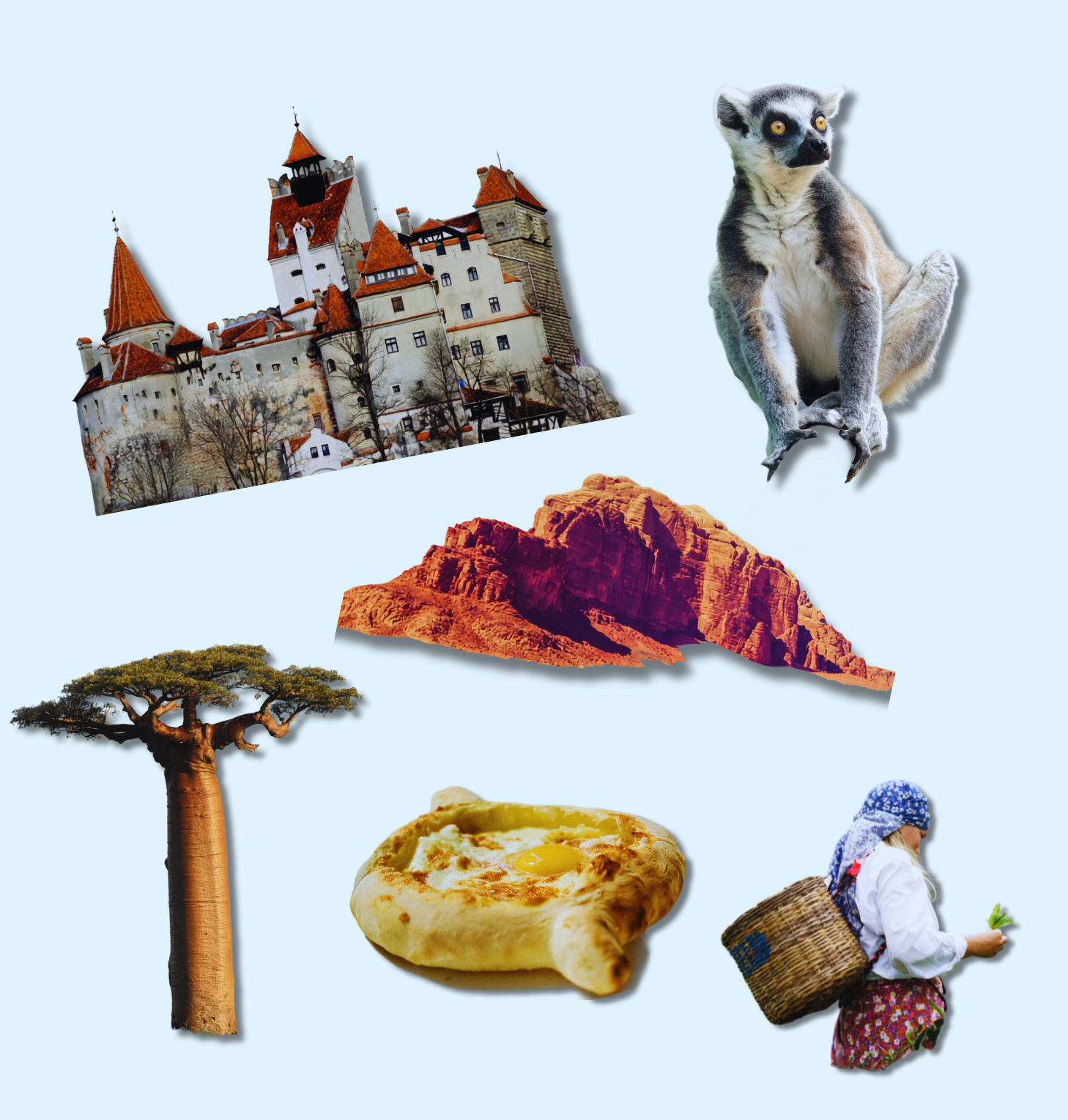
Add dramatic mountain roads through the Caucasus and a food scene built around cheese-stuffed bread (khachapuri) that rivals Italy, and you get a country doing three things - food, wine, mountains - often at lower prices than comparable trips in Western Europe.
Madagascar has one of the world's highest levels of endemism: around 90% of its species are found nowhere else, including its native lemurs. Madagascar has been geographically isolated for tens of millions of years, allowing its wildlife to evolve in extraordinary isolation, which is the actual reason the landscapes look like nothing you've seen: from baobab-lined landscapes and limestone tsingy formations to rainforest and dry southern ecosystems.
The beaches, ancient cities, tea country and wildlife safaris all fit into one relatively compact island - though getting between them can take longer than the map suggests. You can climb the 5th-century rock fortress of Sigiriya, then head into the mountains for tea country and cooler landscapes. It's the rare place where you don't have to choose one kind of trip.
Transylvania is home to medieval castles, fortified Saxon villages and historic towns where centuries-old architecture is still part of the landscape. Add the Carpathian Mountains for hiking, and you get a rare combination of medieval heritage and nature without having to choose between the two.
If you like the landscapes around Dubai but want something quieter and more natural, Oman is worth a look - similar desert-and-coast landscapes, but with a much lower-key urban feel. Wadi valleys with natural pools, the Wahiba Sands (also known as Sharqiya Sands) dunes, and a long, comparatively undeveloped coastline.